Introduction:
The United Nations Education, Scientific, and Cultural Organisation (UNESCO) regularly publishes an Atlas documenting and mapping more than 2,500 global languages that are classified as vulnerable, endangered, or extinct. UNESCO also estimates that of the 6,000 current languages spoken today, more than half will be extinct by the start of the next century, adding that “with the disappearance of unwritten and undocumented languages, humanity will lose not only a cultural wealth, but also important ancestral knowledge embedded, in particular, in indigenous languages.”
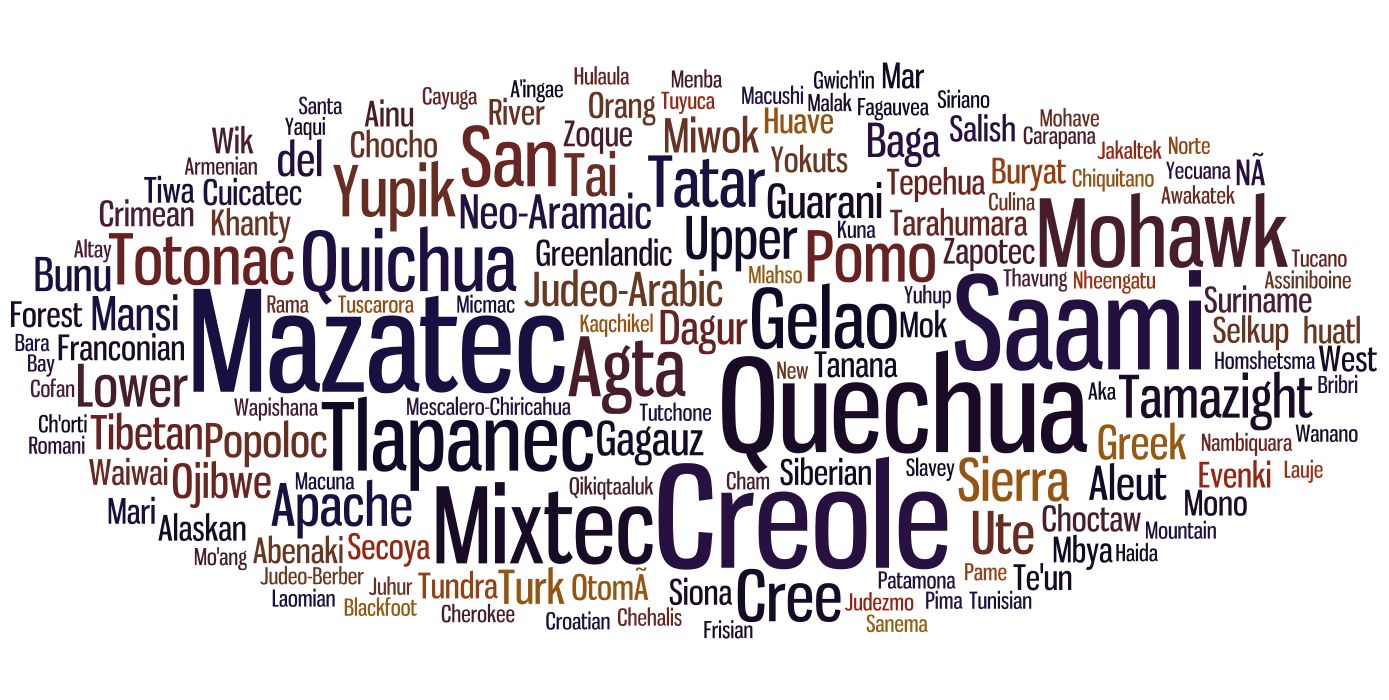
In many cases, these languages require urgent intervention, especially in remote locations where only a handful of speakers remain. There are other languages that remain especially vulnerable due to the external pressures and struggling to pass on the language to the next generation.
Despite some of these sobering statistics, there is also a growing movement emerging where members of these communities are increasingly recognizing the great value in revitalizing their native language through the opportunities provided by technology. Through the use of participatory citizen media and web 2.0 tools, these individuals are building communities around the common use of these under-represented languages and helping to encourage the next generation of speakers.
Projects like Indigenous Tweets have been mapping users who use Twitter in indigenous languages, making it easier to find others who also tweet in these languages. But there are challenges – both linguistically and technically. For some language communities, assistance is available to help develop written alphabets and to help document these languages for further research, which is part of the work supported by the Living Tongues Institute. There are also technical limitations, such as the unavailability of keyboards in minority language fonts. In some cases, there are also cultural barriers in the use of their indigenous languages in such a public setting like the internet.
Despite these challenges, there are many examples of innovative approaches to preserving and promoting these languages through citizen media and web 2.0 tools. Young leaders and “bridge” figures (often referred to individuals that can bridge two different cultures) are building a movement around the use, preservation and promotion of these languages in an online context.
Community Interaction:
- Facebook Group: Citizen Media and Underrepresented Languages [global]
- Facebook Group: Lenguas Indígenas y Medios Ciudadanos [en español]
Since 2011, Rising Voices has been exploring some of these uses of citizen media in revitalizing and promoting the use of underrepresented languages, as well as featuring some of these success stories by language activists across the globe.
Recent posts about Languages and Citizen Media RSS

Getting to know Andria Piciau: A Q&A with a Sardinian language activist
Europe's linguistic diversity is increasingly finding a home online. Rising Voices’ @EuroDigitalLang campaign showcases narratives from language activists such as Andria Piciau, who will be sharing digital initiatives working with the Sardinian language.
“Greetings from…” Oratile Olivia, a Setswana language digital activist from South Africa
Rising Voices invites you to join us for the fifth episode of the “Greetings From…” series with this piece featuring Setswana language digital activist Oratile Olivia from South Africa.
“Greetings from…” Surajo Teete, a Fulfulde language digital activist from Nigeria
Rising Voices invites you to join us for the fourth episode of the “Greetings From…” series with this piece featuring Fulfulde language digital activist Surajo Teete from Nigeria.
“Greetings from…” Siya Masuku, an isiZulu language digital activist from South Africa
Rising Voices invites you to join us for the third episode of the “Greetings From…” series with this piece featuring isiZulu language digital activist Siya Masuku from South Africa.
“Greetings from…” Lucy Iwuala, an Igbo language digital activist from Nigeria
Rising Voices invites you to join us for the second episode of the “Greetings From…” series with this piece featuring Igbo language digital activist Lucy Iwuala from Nigeria.